

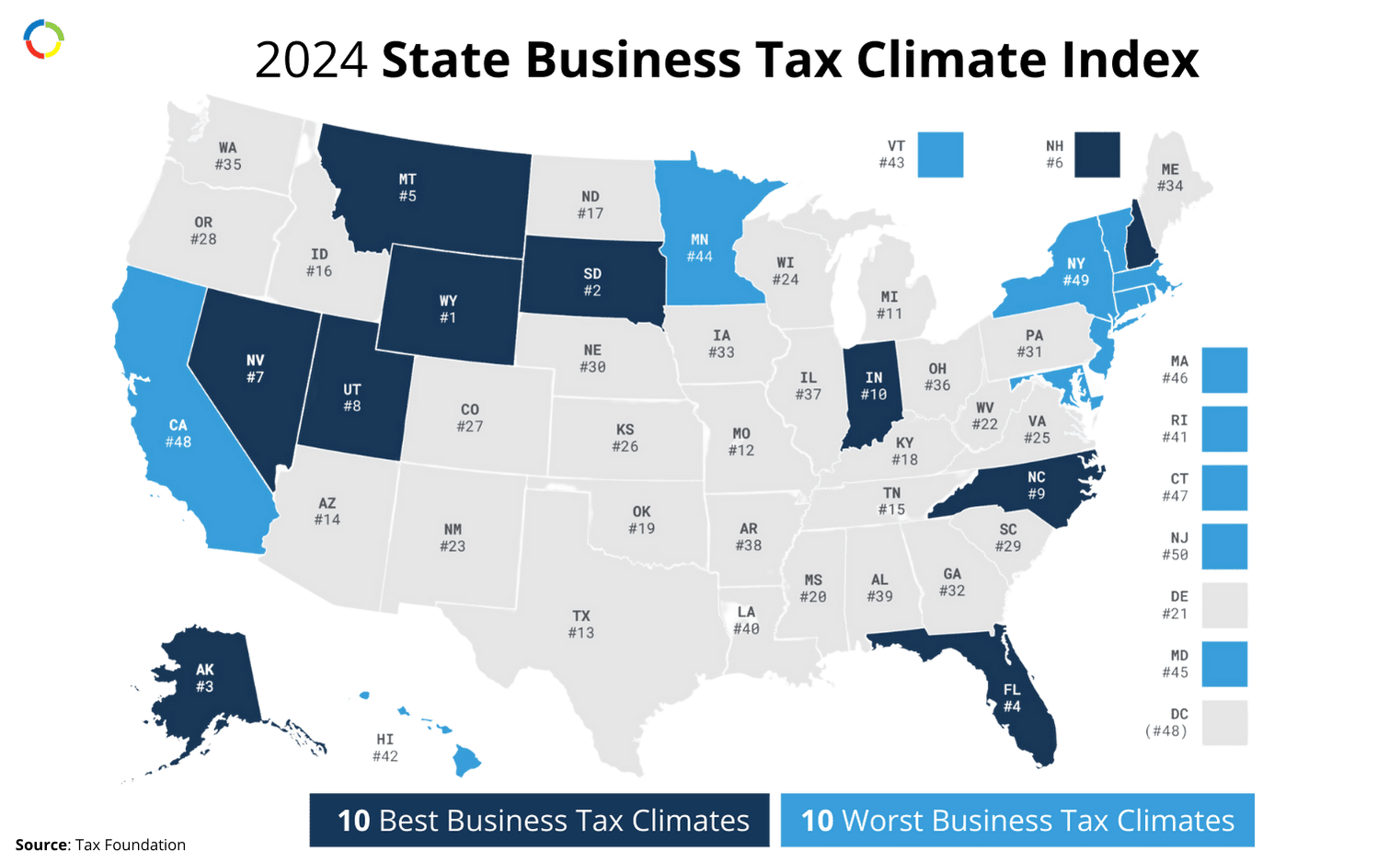
Utah currently uses flat income tax rates. Both the individual income tax rate, and the corporate franchise/income tax rates, are 4.55%.

Utah Tax Filing for Corporations & S Corps
If your company is expanding into Utah, understanding the S corp withholding and apportionment rules can prevent underpayment penalties and unexpected tax liability.
- Filing requirements: Utah recognizes the federal S Corporation election; no separate state S-election filing is required.
- A corporation that has elected S status federally files Form TC-20S (Utah S Corporation Return). Prepayment rules and pass-through withholding apply where relevant. Pass-through entities must withhold Utah income tax on Utah-source income for nonresident owners (and certain entity owners). This is generally reported via Schedule N with the TC-20S/TC-65 and flowed through on owners’ Utah returns. Utah also coordinates this withholding with any elective PTE/SALT workarounds as described in state guidance.
- Allocation & apportionment: Utah uses market-based sourcing for services. It allows either single sales factor or equally weighted three-factor apportionment depending on the taxpayer’s classification. Receipts from services are assigned to Utah if the purchaser receives the greater benefit of the service in Utah (superseding prior cost-of-performance rules).
Partnership Tax Filing & Withholding Rules
Filing requirements: Partnerships doing business in Utah (or with Utah-source income/owners) file Form TC-65. They generally remit pass-through withholding on Schedule N for nonresident owners. You must provide a Utah Schedule K-1 so partners can claim the credit for any Utah tax paid on their behalf.
Employees & individual filers
Generally, you must file a Utah individual income tax return if you’re a Utah resident required to file a federal return, or a nonresident/part-year resident with Utah-sourced income. Residents use Form TC-40; nonresidents and part-year residents complete Schedule TC-40B to compute the Utah tax attributable to Utah income.
Download our Multi-State Tax Filing Requirements Guide
Ensuring Accurate Tax Filings
Consulting an expert CPA can help you keep a handle on different laws and tax implications. We offer multi-state tax help.
Fusion CPA has a team of certified public accountants who are highly skilled in handling multi state taxes. We’re positioned to help you take the stress out of tax season, so you can focus on what really matters. Speak to our Salt Lake City office.

To see how we can help you with a proactive tax strategy to save you time and money, schedule a Discovery Call with one of our CPAs. Or find an office near you.
The information presented in this blog article is provided for informational purposes only. The information does not constitute legal, accounting, tax advice, or other professional services. We make no representations or warranties of any kind, express or implied, about the completeness, accuracy, reliability, suitability, or availability of the information contained herein. Use the information at your own risk. We disclaim all liability for any actions taken or not taken based on the contents of this blog. The use or interpretation of this information is solely at your discretion. For full guidance, consult with qualified professionals in the relevant fields.


