
Key Takeaways
- Understand what’s reported: Form 1099-K captures gross payments from third-party payment processors and marketplaces, but excludes personal transfers not for goods or services.
- Know the thresholds: For 2025, TPSOs report only if gross payments exceed $20,000 and more than 200 transactions. Credit/debit card payments have no minimum threshold.
- Accurate bookkeeping is essential: Track income and expenses throughout the year, reconcile 1099-K totals with your records, and retain documentation for non-taxable items.
- Avoid IRS mismatches: Verify that forms are accurate, taxpayer IDs are correct, and all income is reported (even if a 1099-K isn’t issued) to reduce audit risk.
- Plan proactively: Stay informed about legislative changes, monitor thresholds, and seek professional guidance to ensure compliance and smooth year-end reporting.
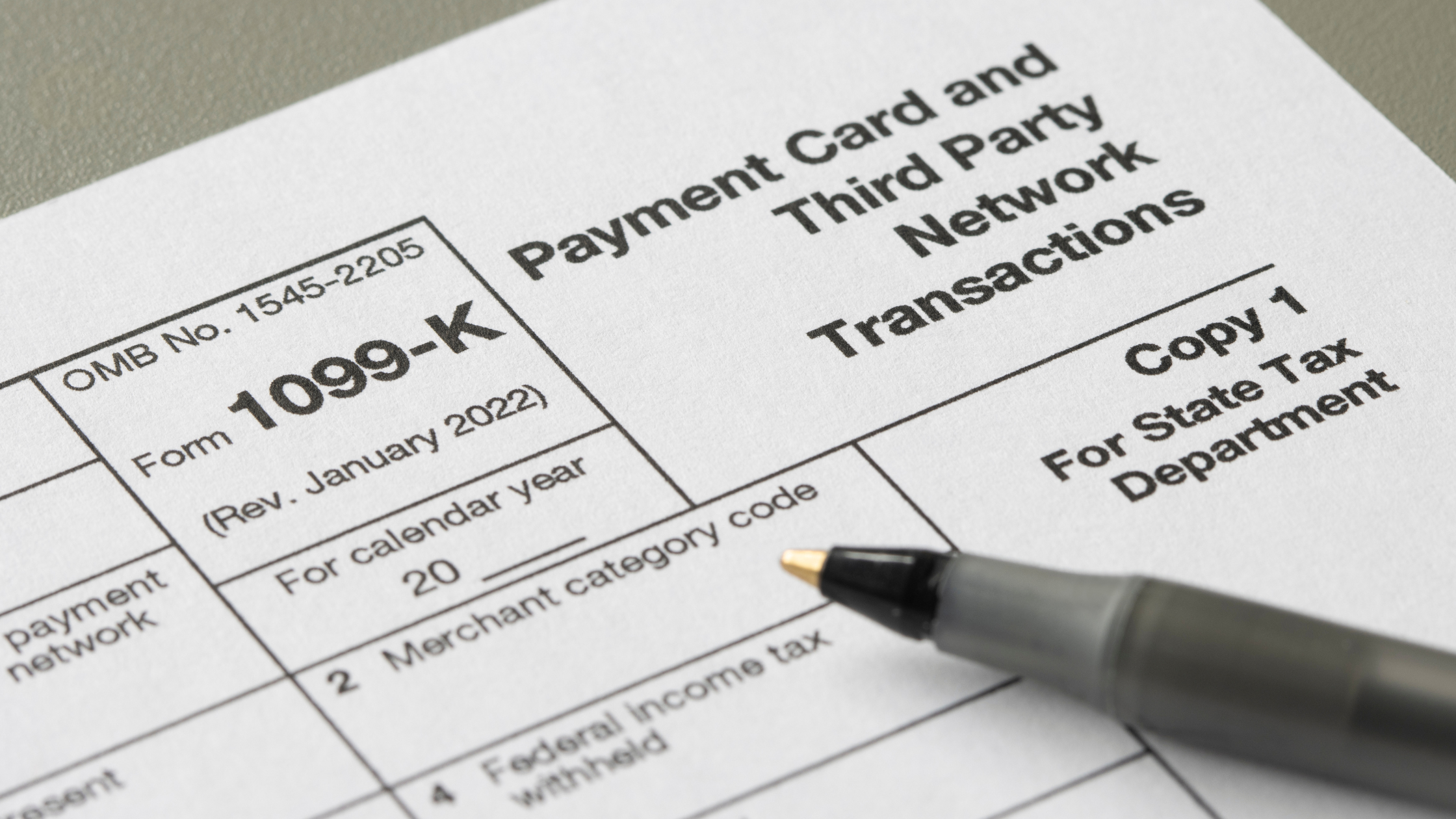
Form 1099-K is a way to help ensure that your income is properly reported on your tax returns. It’s an IRS information return to report certain payments that you or your business received for goods or services. It’s issued by payment card companies and third-party settlement organizations (TPSOs), like payment apps and online marketplaces.
But did you know that Form 1099-K reporting rules have evolved recently? TPSOs must now report when a payee’s gross payments exceed gradually lower thresholds. This is vital information for small businesses and individuals who sell products or offer services through apps like PayPal, Venmo, or Etsy. After all, these updated thresholds mean that many more small sellers and gig workers will receive 1099-K forms, making careful recordkeeping and tax reporting especially important.
In this blog, we’ll walk you through everything you need to know about 1099-K reporting in 2026, to avoid raising red flags with the taxman.
What Payments Are Reported on Form 1099-K?
Generally, there are two main kinds of payments reported on this form.
Third-party payment networks and marketplaces
Form 1099-K captures payments processed by third-party settlement organizations (TPSOs). This includes online marketplaces and payment apps used to receive payments for the sale of goods or services, like:
- Venmo
- Cash App
- PayPal
- Etsy
- eBay
These platforms are responsible for issuing a 1099-K to you and the IRS when the gross amount of reportable payment transactions exceeds the applicable threshold. Note that for the 2025 tax year, this is generally $20,000, and more than 200 transactions on a single platform. Still, some platforms issue the forms at lower amounts.
But it’s important to remember that payments received via credit, debit, or other payment card processors are reportable on your 1099-K regardless of the amount. However, personal transfers between friends and family that aren’t for goods or services typically aren’t reportable.
Gross payment amounts vs taxable income
Form 1099-K reports the gross amount of payments received. In other words, for the total value of all transactions before any deductions. This means that it doesn’t subtract processing fees, refunds issued, shipping costs, discounts, or other similar adjustments, even though these are not taxable income.
So you’ll need to reconcile the gross amounts reported with your own records and adjust for non-income items when preparing your tax return. After all, the IRS receives a copy of the 1099-K, and they’re only interested in your taxable income.
Form 1099-K Reporting Thresholds for 2026
For tax years 2025 and beyond, the IRS restored the long-standing federal reporting threshold of more than $20,000 in gross payments and more than 200 transactions before a TPSO is required to issue a Form 1099-K. This reinstated threshold applies to payments received through payment apps and online marketplaces.
So if you’re a smaller seller and casual user of digital payment platforms, you may not automatically receive a 1099-K unless your activity exceeds both the payment and transaction counts. But it’s important to note that these thresholds apply only to payments processed by TPSOs. As such, individuals, small businesses, and gig workers, freelancers, or online sellers should confirm how each platform classifies payments. If you accept payment cards directly, those processors will issue a Form 1099-K for you regardless of payment volume, because there’s no minimum threshold for card-based transactions.
What happens when the threshold is met?
When your activity on a payment app or marketplace exceeds the reporting threshold, the payment processor will send you a Form 1099-K by January 31 of the following year. It will show the total gross payments they processed on your behalf. The IRS also receives a copy, so the form signals to the agency that payments of that amount were received. This creates a record the IRS can match against your tax return.
Even if you don’t meet the threshold and don’t receive a Form 1099-K, all income from sales or services is taxable and must be reported on your return. The IRS uses this information to cross-check your reported income. So any discrepancies between what the tax man has and what you report can prompt notices or inquiries.
Business Income and Tax Implications
So how is your business’ 1099-k income taxed? When a business or sole proprietor receives a Form 1099-K, the gross payments reported reflect the total payments processed on their behalf for goods and services. This information must be incorporated into the appropriate business tax return for the year. For sole proprietors and self-employed individuals, payments shown on Form 1099-K are generally reported as business income on Schedule C (Form 1040). Here, it is combined with other income and business expenses to determine net profit or loss.
And as for partnerships, S corporations, and C corporations, you’ll report the income on your respective business tax returns. Regardless of whether a 1099-K is issued, all income from sales or services is taxable and must be reported to the IRS.
For small businesses and sole proprietors, the taxable amount isn’t simply the total on the Form 1099-K; it’s the net income after allowable deductions. Federal income tax and, for self-employed individuals, self-employment tax are assessed on that net profit. And importantly, even hobby income can trigger reporting requirements and federal tax consequences if profits exist.
Calculating taxable income correctly
Form 1099-K reports gross payments. As such, it doesn’t account for fees, sales tax collected, refunds issued, shipping charges, or business expenses. However, you can and should deduct these non-income amounts when you’re calculating taxable income on your return.
Accurate bookkeeping and reconciliation between the gross amounts on your 1099-K forms and your internal records are essential. Reconciling ensures you don’t overstate income to the IRS and that you claim all legitimate deductions. This helps prevent mismatches that could flag audits or notices. Keeping organized records throughout the year makes it easier to substantiate reported figures and prepare a precise tax return.
Legislative Changes Affecting Form 1099-K
There are two main acts that affect your Form 1099-k reporting.
The first is the American Rescue Plan Act (ARPA). It initially expanded the scope of Form 1099-K reporting by lowering the threshold that triggers reporting by TPSOs. Under the Act,TPSOs were required to issue a 1099-K for any payee receiving more than $600 in total payments for goods or services in a year with no minimum transaction count. This was a substantial reduction from the historic standard of reporting only for larger-volume activity. The change was intended for tax compliance, although it raised concerns about disproportionate reporting for small sellers and gig workers.
And then there’s the One Big Beautiful Bill Act. This retroactively reinstated the pre-ARPA 1099-K reporting threshold for TPSOs, to the thresholds we mentioned earlier. This reversal, effective for tax years including 2025, means many casual sellers and small-scale gig workers will not automatically receive a 1099-K. This significantly reduces your paperwork and administrative burden.
Calendar Year Reporting Requirements
Let’s start with how calendar year reporting works. Form 1099-K reporting is based on the calendar year (January 1 through December 31). This means that payment settlement entities (like card processors and third-party platforms) report all qualifying transactions that occur within that period. Then they issue the forms by early the following year.
The IRS treats this full calendar period as the basis for determining whether reporting thresholds are met. They also use it for issuing 1099-K forms that you use when preparing your tax returns. This is important because only payments received within the calendar year count toward the totals that trigger your reporting.
Recordkeeping best practices
With so much to consider, effective recordkeeping across payment platforms is essential. You should keep detailed monthly records of the gross transactions reported by each platform. That way, you can monitor cumulative activity throughout the calendar year and anticipate your reporting thresholds.
Maintaining consistent records year-round reduces errors and makes your year-end tax preparation so much smoother.
Common 1099-K Reporting Issues and IRS Concerns
You may be surprised to learn that one of the most frequent issues the IRS sees with Form 1099-K is mismatched income reporting. Because the IRS receives a copy of your 1099-K, it automatically compares the gross payment amounts reported by payment processors with the income reported on your return. If the totals don’t align, the mismatch can trigger IRS notices or requests for clarification. This is why it’s critical to reconcile your 1099-K totals to your accounting records and clearly document and adjustments.
Another common concern involves missing or incorrect taxpayer identification numbers (TINs). If a payment platform doesn’t have accurate taxpayer information on file, it may issue a 1099-K with errors, increasing the likelihood of IRS follow-up.
Final Checklist for Small Businesses
Below is a quick list to help your small business navigate Form 1099-k reporting:
- Confirm payment platforms are compliant. Ensure that the payment apps and online marketplaces you use are reporting to the IRS correctly and on time. This includes verifying whether they issue a Form 1099-K when required under current rules.
- Track payments and expenses throughout the year. Maintain organized records of all business income received across platforms so you can reconcile those amounts with 1099-K totals and ensure accurate tax reporting.
- Understand and monitor reporting thresholds. Stay informed about the reporting thresholds that apply to your selling platforms, so you know when a 1099-K is likely to be issued.
- Verify receipt of Form 1099-K when applicable. Check that you receive any expected 1099-K forms early in the year and review them promptly for accuracy.
- Report taxable income accurately. Use your reconciled records and any 1099-K forms you received to report all taxable income on your business tax return, even if a form wasn’t issued for all payment sources.
- Retain documentation for non-taxable payments. Keep evidence of refunds, reimbursements, shipping fees, and other non-taxable payments. This will help you to support adjustments to gross amounts reported on your 1099-K when calculating your net income.
- Ensure correct tax identification information is on file. Make sure each payment platform has your current taxpayer identification number and legal business name to avoid mismatches that could trigger IRS follow-ups or backup withholding issues.
We can help!
Proactive planning for 2026 is essential. Remember that all income from goods and services remains taxable, and discrepancies between business records and IRS data can result in notices or follow-up questions.
Maintaining compliance is critical to minimizing the risk of IRS notices, penalties, or backup withholding.
That means you need accurate reporting, and proper documentation for non-taxable amounts. Professional guidance is key. The team at Fusion CPA can help you ensure accurate reporting, reduce audit risk, and support your long-term tax planning.
For help navigating your tax strategy, schedule a free Discovery Call with our experts today!
____________________________________________________
This blog does not provide legal, accounting, tax, or other professional advice. We base articles on current or proposed tax rules at the time of writing and do not update older posts for tax rule changes. We expressly disclaim all liability regarding actions taken or not taken based on the contents of this blog as well as the use or interpretation of this information. Information provided on this website is not all-inclusive and such information should not be relied upon as being all-inclusive.